Circular Economy Basics: Material Cascades & Flow Dynamics
A circular economy decouples economic utility from raw virgin material extraction. It is not merely high-volume recycling; it is a prioritized cascade that preserves structural complexity, chemical integrity, and embedded energy.
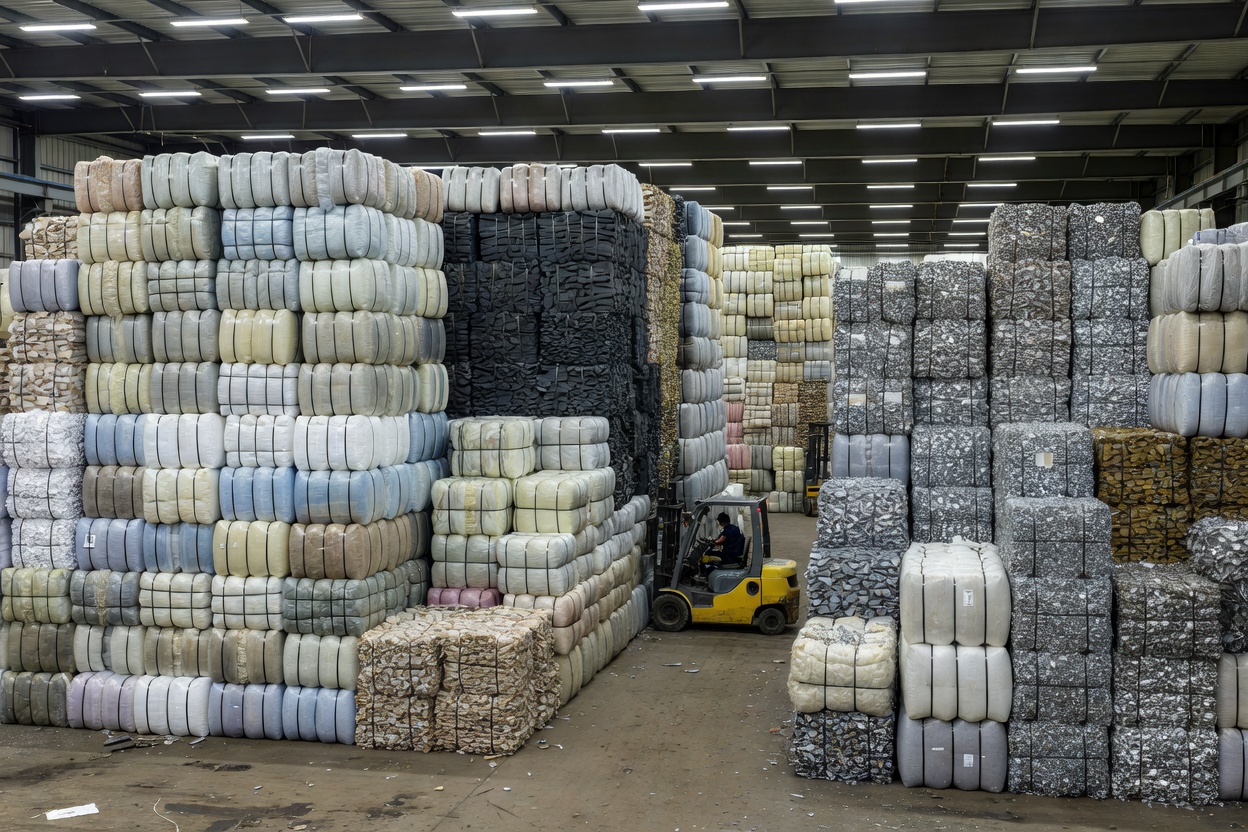
Linear Extraction vs. Circular Cascades
Linear manufacturing follows a three-step path: take, make, waste. Resources are mined, processed with thermal energy, assembled into short-lived goods, and dumped into landfill or incineration plants. The energy expended during synthesis is lost permanently.
Circular systems intercept components before degradation. The primary directive is retaining material at its highest state of utility. A functional gearbox retains more economic and energy value than metal scrap melted in an electric arc furnace.
The Five-Tier Resource Preservation Hierarchy
Every secondary material action has an associated thermodynamic and labor cost. Interventions should follow an exact hierarchy:
- Refuse & Reduce: Eliminate components before manufacturing. Strip redundant protective layers, avoid decorative secondary coatings, and reduce total mass per unit.
- Reuse & Direct Redistribution: Maintain the object in its complete original form. Transfer goods between users without intermediate chemical processing or machining.
- Repair & Refurbishment: Replace worn mechanical interfaces (bearings, seals, switches). Restore the unit to functional operating specifications with minimal new material.
- Remanufacturing: Disassemble industrial equipment to component level. Re-machine structural blocks to factory tolerances, update firmware, and re-certify warranties.
- Material Recycling: Break the chemical or metallurgical structure down to base granules, ingots, or pulps. This is the lowest-tier circular intervention before energy recovery.
Recycling vs. Reuse: Technical Trade-Offs
Recycling is frequently treated as synonymous with circularity. This assumption is technically incorrect. Mechanical recycling alters molecular mass and requires substantial energy.
| Parameter | Direct Reuse / Repair | Mechanical Recycling |
|---|---|---|
| Energy Consumption | Low (transport, minor manual labour) | High (shredding, sorting, melting, re-pelletizing) |
| Material Degradation | Zero structural polymer alteration | Thermal oxidation, polymer chain scission |
| Required Infrastructure | Local workshops, spare part logistics | Heavy capital sorting plants, smelters, wash lines |
| Purity Sensitivity | Tolerant of cosmetic wear | Extreme sensitivity to cross-polymer mixing |
Practical Limitations of Circular Systems
Circular loops are bound by thermodynamics and logistics. Understanding these limits prevents flawed implementation models:
- Entropy and Contamination: Materials disperse during use. Brake dust from vehicles, micro-fibres from synthetic textiles, and microscopic additives cannot be physically recollected.
- Downcycling Accumulation: Additives like carbon black, flame retardants, and food grease degrade secondary resin batches. Without continuous virgin bleed streams, plastic properties deteriorate after 4 to 6 melt cycles.
- Reverse Logistics Energy: Transporting low-density, bulky waste across long continental distances can consume more diesel fuel than virgin raw material transport via sea freight.
- Economic Disconnect: Virgin petrochemical pellets derived from oil refining are often priced lower than sorted, decontaminated recycled pellets due to industrial scale advantages.
Good For
- High-value industrial equipment with standardized component footprints.
- Dense urban collection regions with short reverse logistics routes.
- Homogeneous metals (copper, aluminum, structural steel) with perpetual melt cycles.
- Fleet vehicles, commercial office equipment, and standardized pallets.
What to Know
- Recycling is an energy-intensive safety net, not the primary goal of circularity.
- Composite materials (carbon-fiber bonded resins, paper-plastic laminates) resist circular loops.
- Secondary material markets collapse without strict, automated batch purity certification.
- Design decisions dictate 80% of end-of-life recovery outcomes.
Need Material Stream Consultation?
Our European desk reviews recovery models, life-cycle assumptions, and separation feasibility.
Contact Atlas Operations